
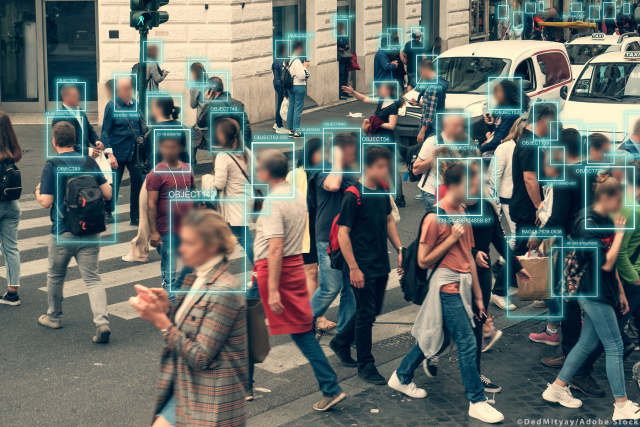
- People need to have control over artificial intelligence systems, and algorithms need to be open source
- Prohibition of private databases for the identification of persons, the preparation of behavioral forecasts by law enforcement agencies and the assessment of citizens
- Automated recognition should not be used for border control or in public places
In order to combat discrimination and guarantee the right to privacy, the EP calls for strict safeguards when AI instruments are used in law enforcement.
In a resolution adopted by 377 votes to 248, with 62 abstentions, MEPs pointed to the risk of algorithmic bias in artificial intelligence (AI) applications and stressed the need for human oversight and strong legal powers to prevent discrimination by AI, especially in the context of law enforcement or border control. Human operators must always make the final decisions, and entities monitored by AI-based systems must have access to redress, MEPs say.
Concerns of discrimination
According to the text, identification systems based on artificial intelligence are now more often mistakenly identifying minority ethnic groups, LGBTI people, the elderly and women, which is particularly worrying in the areas of law enforcement and the judiciary. To ensure respect for fundamental rights in the use of these technologies, algorithms should be transparent, traceable and sufficiently documented, MEPs call. Where possible, public authorities should use AI with open source software to be more transparent.
Contradictory technologies
In order to respect privacy and human dignity, MEPs are pushing for a permanent ban on automated face recognition in public, noting that citizens should only be monitored when a crime is suspected. Parliament calls for a ban on the use of private facial recognition databases (such as the ClearView AI system, which is already in use) and forecasting based on behavioral data by the police.
MEPs no longer want to use the mass assessment of citizens by public authorities with the help of AI, which they consider jeopardizes the principles of non-discrimination and is not in line with EU fundamental rights.
In conclusion, Parliament is concerned about the use of biometric data for the remote identification of people. For example, border control doors that use automated recognition and the iBorderCtrl project («intelligent lie detector system» for the EU’s external borders) need to be shut down, MEPs say, urging the Commission to launch infringement proceedings against Member States, if necessary.
A quote
The rapporteur Petar Vitanov (S&D, Bulgaria) stated: “Fundamental rights are unconditional. For the first time, we are calling for a moratorium on the introduction of facial recognition systems in the context of law enforcement, as technology has been shown to be ineffective and often leads to discriminatory results. We strongly oppose predictions of policing based on the use of artificial intelligence, as well as any processing of biometric data that leads to mass surveillance. This is a huge victory for all European citizens. "
Foto: europarl.europa.eu