
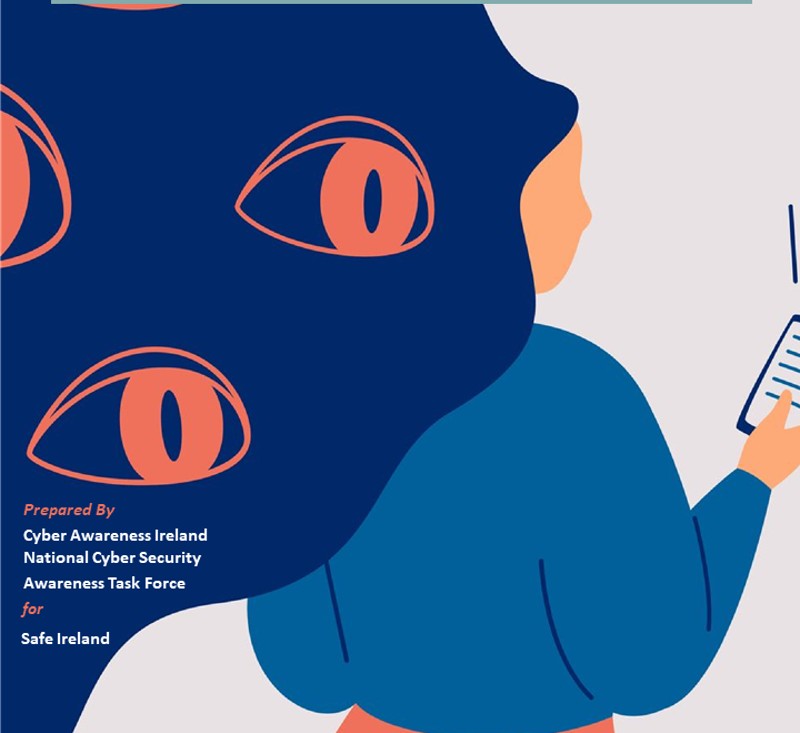
Safe Ireland in association with the National Cyber Security Awareness Taskforce today launched a new safety guide titled Supporting Women: Responding to Technology-Facilitated Domestic Abuse. The booklet has been developed as a tool for frontline domestic-abuse responders to enable them to support women who are victims of technology-facilitated abuse. The booklet was launched on the fringe of the Cyber Ireland National Conference and follows a two-week billboard campaign in Cork which created awareness of behavioural red-flags which signal technology-facilitated abuse.
As technologies and platforms that make our lives easier are increasingly being used by more and more people every day, perpetrators of abuse are also adopting these technologies to exert coercion and control over their partners. According to Mary McDermott CEO of Safe Ireland, digital abuse follows the norms of other forms of abuse where victims are often blamed, disbelieved or dismissed:
“Technology-facilitated abuse has become a powerful means of coercion by perpetrators which allows significant reach beyond the boundary of the home. As healthy behaviours regarding the use of technology have not yet been culturally settled, in many cases women may not recognise technology-facilitated coercion and abuse as the behaviour may be perceived as normal.”
The safety-guide has been designed for specialist domestic violence professionals who work with victims of domestic abuse and coercive control as it impacts women and children. Its primary use is for frontline responders
in Domestic Violence Services and Refuges but is also designed as a resource for allied professionals such as Gardaí, doctors, nurses, social workers, pharmacists and other healthcare professionals. Family, friends, neighbours and other community members may also find the guide useful if they are supporting someone at risk of technology-facilitated abuse.
Commenting on the collaboration Joanne O’Connor, Founder of Cyber Awareness Ireland said:
“The partnership between the National Cyber Security Awareness Task Force & Safe Ireland is narrowing the tech security knowledge gap between the cyber security industry in Ireland and the national organisation that supports survivors of domestic abuse. We hope this guide will enable support and service workers bolster the existing services Safe Ireland provide and enhance the protection of victims and survivors of technology-facilitated abuse. We also encourage the general population to absorb this guide on responding to technology-facilitated abuse to better equip each of us to recognise and respond in safe, encouraging and informed way.
Users of the booklet will also have access to a number of support-training initiatives including free Cyber Security Essentials Training webinars provided by Hewlett Packard Enterprise and a series of informational videos created by security software development company Trend Micro. This will be further supplemented later in the year by access to a new online accredited course in technology-assisted abuse which is currently under development at University College Cork. The course will be available nationally and is designed specifically for frontline domestic abuse professionals, but is also expected to be of significant interest to University staff and students.
END
For further information on this statement please contact
Miriam Kivlehan Programme & Communication Manager 086 383 6877 | Email: miriam safeireland [ punto ] ie (miriam[at]safeireland[dot]ie)
About the Campaign Partners
Safe Ireland is a registered charity operating as a national development, advocacy and co-ordination body to eradicate Domestic Violence (DV) through its nationwide network of 39 DV refuge and support-service affiliates.
Cyber Skills provides online cybersecurity education through university accredited pathways and micro-credentials in order to upskill the workforce against cybersecurity threats and attacks.
Cyber Awareness Ireland (CAI) is a national body who research, develop & curate Cyber Security Awareness messaging in Ireland. They are the national curators for the international STOP.THINK.CONNECT™ campaign. Cyber Awareness Ireland established the National Cyber Security Awareness Task Force.
The National Cyber Security Awareness Task Force (NCSATF) is a consortium of Cyber Industry professionals who are bringing their understanding of technology to domestic violence support services. The NCSATF is committed to bringing security professionals together to tackle driving forces and reduce human risk within society in Ireland. The Taskforce committed to a 12-month collaboration with Safe Ireland in an aim to close the knowledge gap between the cyber security industry in Ireland and the organisations that support survivors of domestic abuse and coercive control.