
Anonymiss [Video]
Interview in English

A member of anonymiss, the yin to the Anonymous yang, tell us about how and why she learned technologies, how is it to work in the ICT industry, why she joined anonymous and how she feel when she hacked in a third party server. / CAST: Un miembro de anonymiss, el yin del Anonymous yang, nos cuenta acerca de cómo y por qué aprendió tecnologías, cómo es trabajar en la industria de las TIC, por qué se unió al grupo anomymous y cómo se siente cuando hackea un servidor ajeno.
Anonima [Video]
Entrevista en Castellano

La entrevistada nos cuenta porqué empezó a programar y de que manera el software libre la salvo cuando estaba en la universidad de informática. Detalla sus intereses y dificultades para desarrollar redes descentralizadas y encriptadas. / ENG: In this interview she explains how she engaged with CS and development and how free software saved her when she was at the university. She details her interests and difficulties to develop decentralized and encrypted social networks.
Azza [Video]
Entretien en Français

Blackhold [Video] [Bio]
Entrevista en Catala

Blackhold es un ser inexistente en un plano real, pero si en uno platónico y virtual. Desde Febrero del 2010 estamos trabajando juntamente con otras dos personas en marsupi, un rizoma de servidores autogestionados que replican continuamente sus datos por la red guifi.net (la red wifi libre y ciudadana con mas nodos del mundo -más 14.000 nodos a día de hoy-), ofreciendo alta disponibilidad (que no redundancia) con unos recursos mínimos. Junto a esto mi implicación dentro de guifi.net ha ido creciendo poco a poco hasta empezar a dar charlas y colaborar con la difusión del proyecto tanto en euskal herria, madrid, cabrales, etc. El objetivo que tenemos desde marsupi es generar contenidos dentro de esta red, así los usuarios que usen tales servicios no tendrán que salir a internet, con la ventaja de que el ancho de banda será mayor. Algunos de los servicios que ya tenemos en marcha son webs, dns, listas de correo, correo, un editor de texto colaborativo y en pruebas un servidor de streaming y de VoIP (este último parte del proyecto de VoIP de guifi.net). [Fuente: http://blackhold.nusepas.com/quant-a/]. En esta entrevista, blackhold nos cuenta sus primeras memorias, como ha ido aprendiendo y porque se enreda en proyectos tecnopoliticos./
ENG: Blackhold is not a real person in the real life but it is one platonic virtual identity. Since February 2010 i am working together with two other people in marsupi, an initiative of self-managed servers rhizome continually replicating data across the network guifi.net (free wifi network with over 14.000 citizen nodesover the world), providing high availability (not redundancy) with minimal resources. Along with this my involvement within guifi.net has grown gradually to start giving talks and cooperate with the dissemination of the project in eusakl herria madrid, Cabrales, etc.. Our objective, from marsupi is generating content within this network, so users who use such services will not have to go online, with the advantage that the bandwidth will be higher. Some of the services that we have in place are websites, dns, mail lists, mail, collaborative text editor and test a streaming server and VoIP (the latter part of the guifi.net VoIP). [Source: http://blackhold.nusepas.com/quant-a/]. In this interview, Blackhold tell us about her first memories, how she has learned and why she has increasingly got entangled in techno-political projects.
Bruna [Video]
Entrevista en Portugues
Frances Brazier [Video] [Bio]
Interview in English

Frances Brazier is a full professor of Computer Science at the Vrije Universiteit in Amsterdam, the Netherlands. She chairs the Intelligent Interactive Distributed Systems Group. IIDS’ research focuses on distributed (autonomic) management of (systems of) large scale distributed autonomous systems, on the edge of multi-agent research together, service oriented computing, autonomic computing and the grid, with a special interest for interaction with human participants. In collaboration with the Computer and Law Institute at the VU, IIDS also addresses acceptance of autonomous systems for society: criteria for design and development. She has published significantly in above mentioned areas, AI and design, Web Services, and Human-Computer Interfaces. She is currently on the editorial board of “AI in Design and Manufacturing”, and Birkhauser’s book series on Autonomic Systems. Beyond her academic career she has also been involved in numerous ventures including NLnet, the first ISP in the Netherlands, and the NLnet Foundation. [Source: http://icst.org/frances-brazier/]. In this interview Frances remind how and why she engaged with CS, what has changed in the field of ICT and networks in the past three decades, what can be achieved to get more women in CS careers at the university and she also explain her researches on distributed systems. /
SP: Frances Brazier es profesora titular de Ciencia de la Computación en la Vrije Universiteit de Amsterdam, Holanda. Ella preside el Grupo de Sistemas Distribuidos interactivos inteligentes. Su investigación IIDS 'se centra en la gestión a gran escala de sistemas autónomos distribuidos, la función de los multi-agentes en conjunto, la computación orientada a los servicios, todo ello con un interés especial para la interacción con seres humanos . En colaboración con el Instituto de Derecho Informático y de la VU, IIDS también se ocupa de como la sociedad puede aceptar e interactuar con esos sistemas autónomos. Ha publicado de manera significativa en las áreas antes mencionadas y actualmente es miembro del consejo editorial de «Inteligencia Artificial en Diseño y Fabricación». Más allá de su carrera académica también ha participado en numerosas empresas, incluyendo NLnet, el primer proveedor de internet en los Países Bajos y la Fundación Nlnet dedicada al fomento del software libre. [Fuente: http://icst.org/frances-brazier/]. En esta entrevista Frances recuerda cómo y por qué se involucró con la informática, lo que ha cambiado en el campo de las TIC y las redes en las últimas tres décadas, y como se puede lograr desde la universidad que más mujeres se apunten a carreras de informática.
Candela [Video]
Entrevista en Catala

Elektra [Video]
Interview in English
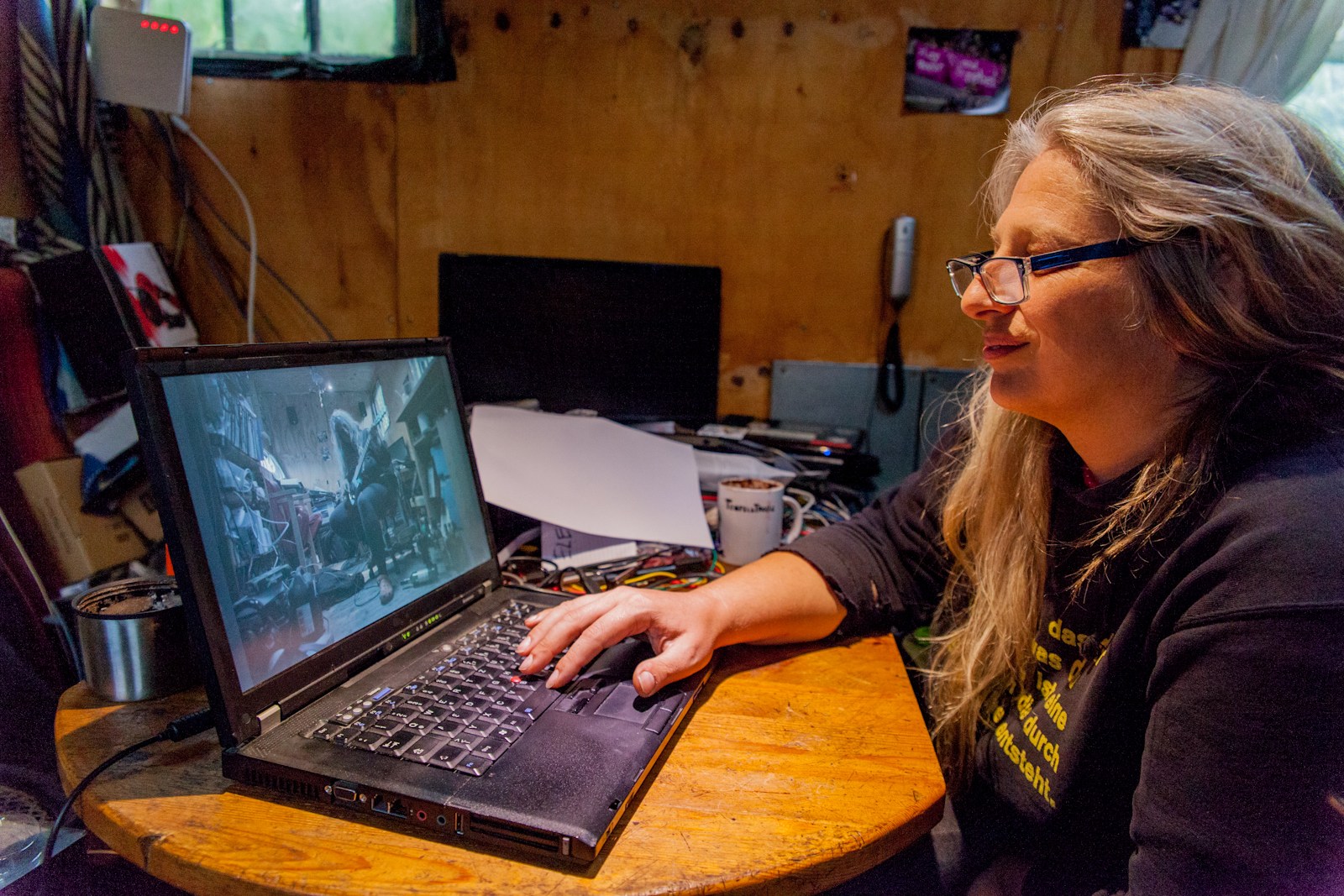
Member of the Chaos Computer Club, and the C-Base, two German hackerspaces, Elektra is a self-taught free culture expert. In 2008, as she was thinking with a «peer to peer» wireless protocol, the Council for Scientific and Industrial Research (CSIR) from Tshawne (formerly Pretoria) in South Africa called her to work with a team of researchers and developped «Mesh Potato”, a device for providing low-cost telephony and Internet in areas where alternative access either doesn’t exist or is too expensive. It is a marriage of a low-cost wireless access point (AP) capable of running a mesh networking protocol with an Analog Telephony Adapter (ATA). [Source: http://www.gaite-lyrique.net/gaitelive/allo-elektra and http://villagetelco.org/mesh-potato/]. In this audio, elektra and maxigas, our gentle interviewer, have a conversation together about how she learned and got interested with wifi and mesh networks, They analyse the evolution of technologies and analise in-depth past and present initiatives to enable the access for all to ICTs and the role of developing your own devices for communication./
CAST: Miembro del Chaos Computer Club, y el C-Base, dos hackerspaces alemanes, Elektra es una experta autodidacta en cultura libre. En 2008, mientras estaba pensando en un protocolo inalámbrico »peer to peer", el Consejo de Investigación Científica e Industrial (CSIR) de Tshawne (antes Pretoria) en Sudáfrica la llamo para trabajar con un equipo de investigadores desde dónde desarrollaron el «Potato Mesh », un dispositivo para proporcionar a bajo coste telefonía e Internet en las zonas donde el acceso alternativa es sea inexistente demasiado caro. [Fuente: http://www.gaite-lyrique.net/gaitelive/allo-elektra and http://villagetelco.org/mesh-potato/]. En este audio, Elektra y Maxigas, nuestro amable entrevistador mantienen una conversación acerca de cómo Elektra aprendió a desarrollar tecnologías y se intereso por desarrollar mallas de redes WiFi. También hablan de la evolución de las tecnologías, y analizan en profundidad algunas iniciativas para permitir el acceso de todos a las TIC y subrayan la importancia del desarrollo de nuestros propios recursos para la comunicación.
Elisa [Video]
Entrevista en Portugues

Elleflane [Video] [Bio]
Entrevista en Castellano
“Quiero crear redes entre las personas y fuerza colectiva para arreglar la parte del mundo que está mal diseñada, porque las cosas si que pueden ser de otra manera. Y si hago algo, es para pasarlo bien, para pasarlo mal, no lo hago". Ingeniera Industrial UNED Universidad Nacional a Distancia; Ingeniera Técnica en Diseño Industrial Universidad Elisava Pompeu Fabra; Realiza cortometrajes, poesías, cuadros, cómics, novelas fantásticas, inventos, +, ++, +++ También estuvo cursando talleres en la ESA European Space Agency (tal y como demuestra su fotografía ;-).En esta entrevista Elleflane mos cuenta acerca de su concepción de ser hacker, así como nos explcia varias iniciativas como la Universidad popular La rimaia, el Hardmeeting y el laboratorio de investigación de inventos de Tesla en los cuales esta involucrada./
ENG: «I want to create networks between individuals and collective strength to fix that part of the world that is poorly designed, because things can be otherwise. And if I do something, it is to have fun, to have a hard time, I do not do it. »Industrial Engineer National Open University UNED, Technical Engineering in Industrial Design Elisava Pompeu Fabra University. She makes short films, poems, paintings, comics, fantasy novels and inventions, +, + +, + + + She was also enrolled in workshops in the ESA European Space Agency (as evidenced by her picture;-). In this interview Elleflane share with us her vision of being an hacker conception and she presents different initiatives she is involved with such as the popular university La rimaia, the Hardmeeting and the research laboratory where Tesla investions are tested.
Gloria [Video]
Interview in English
Many years of *NIX software development and system admin in the NYC area and elsewhere, mostly from scratch, for start-ups.
Reni Hofmüller [Video]
Interview in English
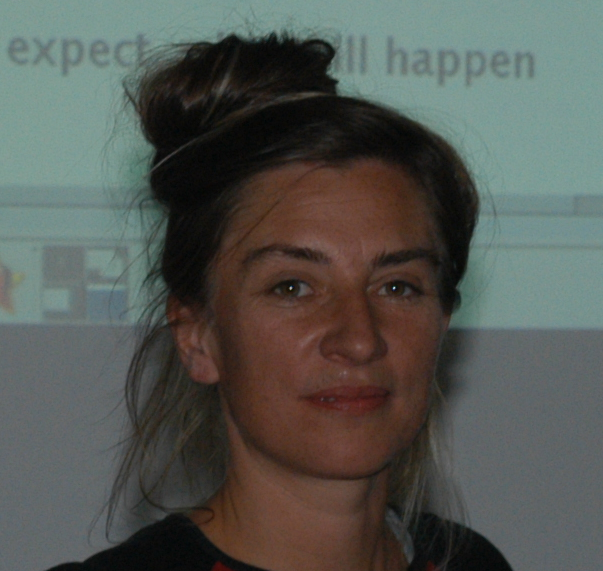
Artist, musician, composer, performer, organizer and activist in the fields of usage of (new) media, technology and politics in general, engaged in development of contemporary art.
last president of Eva&Co, founding member and artistic director of ESC im LABOR, now esc medien kunst labor, initiator of 42, ex-member of LTNC, founding member of Radio Helsinki
founding member of mur.at, member of IMA Institut für Medienarchäologie, part of eclectictechcarnival.org, part of mursat team http://sat.mur.at, home: http://renitentia.mur.at
Cinthia Mendonça [Video]
Entrevista en Portugues

Encuentro de mujeres de diferentes áreas e intereses profesionales, empeñadas en la interacción de los lenguajes estéticos y la convergencia de la realidad femenina en el mundo del arte, la tecnología y la ciencia. Creamos a partir de la interacción de lenguajes estéticos aplicados a la escena multimedia. Buscamos una posible narrativa que se expresa en diferentes lenguajes: movimiento, audiovisual y programación computacional, reuniendo poética y practica de la tecnología. (Fuente: http://cinthia.mobi/adamachine/). En esta entrevista Cinthia nos cuenta acerca del proyecto Ada machine, las motivaciones detrás y las practicas que desarrollan con tech en el proyecto mismo./
ENG: A meeting of women coming from different areas and professional interests, engaged in the aesthetic language interaction and convergence of female reality in the world of art, technology and science. We created from the interaction of aesthetic languages applied to multimedia scene. We seek a possible narrative that is expressed in different languages: movement, audiovisual and computer programming, bringing together poetic and technology practice. (Source: http://cinthia.mobi/adamachine/). In this interview Cinthia tells us about the Ada machine project, the motivations behind and the practices they develop with tech during the development of the project
Mercé Molist [Video]
Entrevista en Catala
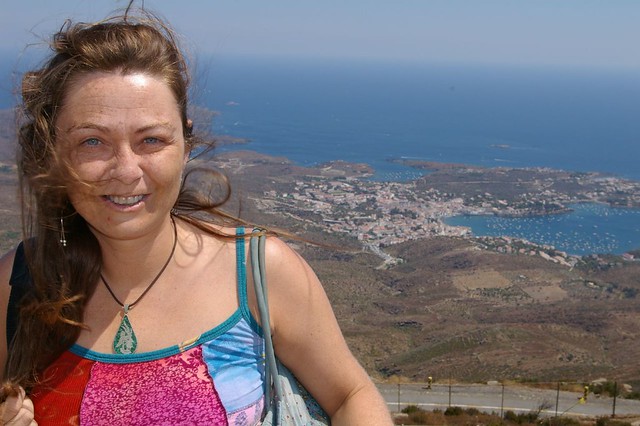
Mercè Molist Ferrer es una periodista de Cataluña (España), especializada en Internet, comunidades virtuales y seguridad informática. Colabora en el suplemento sobre tecnología e Internet de El País desde sus inicios; escribió también en la ya extinta revista Web, y en @rroba. Formó parte desde 1996 de Fronteras Electrónicas, una asociación civil en favor de los derechos electrónicos que promovía el libre uso de la criptografía y defendía la privacidad y la no intromisión de los gobiernos en la red, luego transformada en el capítulo español de Computer Professionals for Social Responsibility. Vinculada por su trabajo con la comunidad hacktivista española, Molist introdujo en el 2000 la idea de traspasar los Hackmeetings italianos a España[cita requerida]; aquel año colaboró en la coordinación del primero, que se celebró en Barcelona, en el centro okupado Les Naus. Actualmente esta trabajando en el proyecto Hackstory (hackstory.net/Main_Page), un libro acerca de la cultura hacker hispana. En esta entrevista Mercé nos relata sus inicios, como descucbrió la cultura hacker, que es lo que la atrapo, como es trabajar como periodista dentro del marco de la cultura libre. /
ENG: Mercè Molist Ferrer is a journalist of Catalonia (Spain), specialized in Internet, virtual communities and computer security. She collaborated with the supplement on technology and the Internet of the journal El Pais since its inception, she also wrote in the now defunct Web magazine, @ rroba. She was a member since 1996 of the civil association Electronic Frontiers, an initiative intended to promote electronic rights, the free use of cryptography and defended privacy from government interference in the net, and which has become since then Spanish chapter of Computer Professionals for Social Responsibility. Her work is deeply linked with the Spanish hacktivist community, Molist introduced in 2000 the idea of Hackmeetings from Italy to Spain and helped to coordinate the first, held in Barcelona, in the center squatted Les Naus . Currently she working on the project Hackstory (hackstory.net/Main_Page), a book about the latin hacker culture. In this interview Mercé tells us about her beginning, how she discovered hacker culture and what did she felt amazing about it. She also explains how it is to work as a freelance journalist whithin the free culture movement.
Mathilde Mupe [Video]
Interview in English
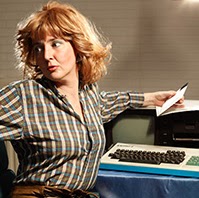
Mathilde μP explored from a young age science and various skills. As autodidact se mastered a variety of artistic disciplines. A turning point cae in 1993 when she built The Stone Age Computer for an internet camping event. This was Mathilde µP’s first electronic installation. Later installations also had as key element the physical challenge with using computers. In 2004 she entered the Foto Academy in Amsterdam. The first three years she specialised in documentary, she graduated in 2007 with fine art photography. Besides humanity colour plays an important role in her photography. [Source: http://mathilde.mupe.nl/prologue.htm]. In this interview Mathilde share with us about when and how she engaged with technologies and artistic practices basing in taking a part devices, playing with electronics and hardware in order to invent new artifacts that offer different perspectives and interactions with technologies./
CAST: Mathilde Mupe (microprocesador) empezó a explorar la ciencia desde una edad temprana. Como autodidacta llegó a dominar una gran variedad de disciplinas artísticas. Un punto de inflexión se produjo en 1993, cuando construyó el ordenador de la edad de piedra para una acampada internet. Esta fue su primera instalación electrónica. Sus instalaciones posteriores también tenían como elemento clave el reto físico derivado del uso de computadoras. En 2004 ingresó en la Academia Foto de Amsterdam. Los tres primeros años se especializó en el documental, se graduó en 2007 con la fotografía artística. [Fuente: http://mathilde.mupe.nl/prologue.htm]. En esta entrevista Mathilde comparte acerca de cuándo y cómo se involucró con las tecnologías y prácticas artísticas basadas en desmontar dispositivos, explorar la electrónica y el hardware con el fin de inventar nuevos artefactos que ofrezcan perspectivas e interacciones diferentes con las tecnologías.
Analee Newitz [Video]
Interview in English

Analee Newitz is the lead editor for science fiction and science blog io9—it went live in January 2008, and in 2010, over 2 million people read it every month. I am also a freelance writer, contributing work to Wired, Popular Science, New Scientist, and other excellent publications. During 2004 and most of 2005, I was the policy analyst at the Electronic Frontier Foundation. In 2006 I published a book based on my doctoral research. It’s called Pretend We’re Dead, and it was published by Duke University Press. In early 2007, Seal Press published a collection of essays I co-edited called She’s Such a Geek—yes, it’s about female nerds. My work has also appeared in magazines and papers such as: The Washington Post, New York Magazine, Technology Review, Hilobrow, The San Francisco Chronicle, 2600, The Believer, Nerve, The Utne Reader Online, Alternative Press Review, New York Press, The San Francisco Bay Guardian, The Silicon Valley Metro, and several academic journals and anthologies. From 1999 to 2008, I wrote a weekly syndicated column called Techsploitation, which was about the ways that media mutates and reiterates the problems of everyday life. Formerly, I was the culture editor at The San Francisco Bay Guardian and in 2002 I was awarded a Knight Science Journalism Fellowship, which allowed me to spend the 2002–2003 academic year as a research fellow at MIT [Source: http://www.techsploitation.com/about/]. Annalee Newitz shares with us about her first memories, how did she learn administrating a BBS and her own conception of the meaning of hacking and gender perspectives in the field of free software development. /
CAST: Soy la editora principal del blog de cienta y ciencia ficción io9 que se puso en marcha en enero de 2008, y cuenta en 2010 con más de 2 millones de lectoras cada mes. Soy también escritora independiente, contribuyó a Wired, Popular Science, New Scientist, y otras publicaciones. Durante 2004 y parte de 2005, fui analista político para la Electronic Frontier Foundation. En 2006 publiqué un libro basado en mi investigación doctoral. Se llama Pretend We’re Dead, y fue publicado por Duke University Press. A principios de 2007, Seal Press publicó una colección de ensayos que co-edite llamado She’s Such a Geek acerca de mujeres nerds. Mi trabajo también ha aparecido en revistas y periódicos como: The Washington Post, New York Magazine, Technology Review, Hilobrow, The San Francisco Chronicle, 2600, The Believer, nervios, La línea del lector Utne, Alternative Press Review, New York Press, El San Francisco Bay Guardian, The Silicon Valley Metro y varias revistas académicas y antologías [Fuente: http://www.techsploitation.com/about/]. Annalee Newitz comparte con nosotros acerca de sus primeros recuerdos, cómo aprendió administrando un BBS y nos brinda su propia concepción de la perspectiva de género en el ámbito del desarrollo de software libre.
Tatiana de la O [Video]
Entrevista en Castellano

Activista del software libre, VJ con PureData y contribuidora a varios proyectos de soporte telemático a los movimientos sociales. En esta entrevista Tatiana nos cuenta porqué y como aprendió a usar y desarrollar software libre, su visión acerca de la diferencia entre los procesos de aprendizaje que se dan en la universidad y de manera informal en procesos más autodidactas./
ENG: Free software activist, VJ with PureData and contributor to different projects providing technological support to social movements. In this interview, Tatiana tell us about how and why she learned and engaged with free software and the difference she see between learning ICT in the university or through more informal ways based in autodidact processes.
Margarita Padilla [Video]
Entrevista en Castellano

Ingeniera informática y ex Directora de la revista Mundo Linux, pertenece a esa escasa minoría de mujeres capaces de crear y mantener sistemas. Aprendió GNU/Linux y los usos sociales y políticos de las nuevas tecnologías en centros sociales okupados. Algo que en la Universidad nunca le enseñaron. Junto a otros hackers, fundó Sindominio.net. Ha emitido radio por Internet a través de Radiopwd, emisora realizada por un grupo de mujeres desde el hacklab de Lavapiés (Madrid), y ha publicado diversos artículos sobre acción política y sobre las nuevas tecnologías comunicativa como “El kit de la lucha en Internet” (Traficantes de sueños, 2012). En la actualidad trabaja en Dabne, cooperativa de trabajo asociado constituida por mujeres y dedicada al desarrollo de aplicaciones web sobre software libre, aunque le gusta decir que su trabajo consiste en “hacer Internet”. [fuente: Medialab Prado /http://medialab-prado.es/person/margarita_padilla_] . En esta entrevista Margarita nos habla de como fue aprendiendo, sus motivaciones, asi como comparte sus perspectivas políticas acerca de las tecnologías, introduciendo concretamente la noción de soberanía tecnológica y los problemas derivados de confundir software libre con gratuidad. / Computer engineer and former Director of the Linux World magazine, she belongs to that small minority of women able to build and maintain systems. She learned GNU / Linux and the social and political uses of new technologies in squatted social centers. Along with other hackers, she founded Sindominio.net, an autonomous cooperatyive server for social movements. She has also been involved with a Radiopwd, a radio station developed by a group of women from the hacklab Lavapies (Madrid). She has published several articles and books on political action and the new communication technologies as for insatnce the «Fighting kit on the Internet» (Traficantes de sueños, 2012). She is currently working for Dabne, a cooperative of women dedicated to the development of free software web applications, although she likes to say that her job is to «make the Internet» [source: Medialab Prado / http://medialab-prado.es/person/margarita_padilla_]. In this interview, Margarita talks about how she learned, her motivations, as well as she shares on her political views about technology, specifically introducing the notion of technological sovereignty and presenting the problems of confusing free software with free beer.
Paula Pin [Video]
Entrevista en Castellano
Performer audiovisual que interesada por nuevas formas de interacción tecnológica y social, colabora en diferentes eventos y workshops. Su participación en los talleres de interactivos (MediaLab-Prado Madrid) y Hangar, la estancia en la universidad de Leipzig, Alemania, y la colaboración en el Summer Camp de LABoral, Gijon durante el 2008 aumentan el contacto con las comunidades Open Source y su interés por las filosofías DIY y DIT. En 2010 realiza una estancia en la Universidad de Sao Paulo, Brasil, allí colabora con iniciativas como Ruidocracia (sesiones experimentales de Live Video y Noise) y continúa con proyectos que abordan temas de identidad, a partir de relaciones con el cuerpo íntimo-público e interacciones mecánico-electrónicas.
Melanie Rieback [Video]
Interview in English
Dr. Melanie Rieback is an Assistant Professor of Computer Science at the Vrije Universiteit in Amsterdam, in the group of Prof. Andrew Tanenbaum. Melanie’s research concerns the security and privacy of Radio Frequency Identification (RFID) technology, and she leads multidisciplinary research teams on RFID security (RFID Malware) and RFID privacy management (RFID Guardian) projects. Her research has attracted worldwide media attention, appearing in the New York Times, Washington Post, Reuters, UPI, Computerworld, CNN, BBC, MSNBC, and many other print, broadcast, and online news outlets. Melanie’s research has received several awards (Best Paper: IEEE PerCom '06, Best Paper: USENIX Lisa '06, NWO I/O Prize, VU Mediakomeet, ISOC Award finalist), and Melanie has also served as an invited expert for RFID security discussions with both the American and Dutch governments. In a past life, Melanie also worked on the Human Genome Project at the Whitehead Institute / MIT Center for Genome Research. [Source: http://www.few.vu.nl/~melanie/biography.html]. In this interview Melanie talks about her work as a researcher, her visions about security and privacy and how white hackers practices can help defend those values. She also tells us about her participation in events such as the girl geeks dinners in order to encourage the entry of more women in the development of information technologies and in general science. /
SP: Dr. Melanie Rieback es profesora asistente de Ciencias de la Computación en la Vrije Universiteit de Amsterdam, en el grupo del Prof. Andrew Tanenbaum. La investigación de Melanie se centra en la seguridad y privacidad de las tecnologías de identificación por radiofrecuencia (RFID), y dirije equipos multidisciplinarios de investigación en materia de seguridad RFID (RFID malware) y privacidad de RFID (RFID Guardián) proyectos. Su investigación ha atraído la atención mundial de los medios apareciendo en el New York Times, Washington Post, Reuters, UPI, Computerworld, CNN, BBC, MSNBC etc. Su investigación ha recibido varios premios (Mejor Papel: IEEE Percom '06, Mejor Libro: USENIX Lisa '06, Premio NWO I / O, VU Mediakomeet, ISOC finalista del Premio), y Melanie también ha servido como experta invitada para las discusiones acerca de seguridad RFID llevadas a cabo por parte de los gobiernos norteamericano y holandés. En una vida pasada, Melanie también trabajó en el Proyecto Genoma Humano en el Instituto / MIT Center Whitehead para la Investigación del Genoma. [Fuente: [Source: http://www.few.vu.nl/~melanie/biography.html]. En esta entrevista Melanie nos habla de su trabajo como investigadora, que visión tiene de la seguridad y privacidad y como las practicas hackers pueden ayudar en defender esos valores. También nos cuenta su participación en eventos como los girls geeks dinners para fomentar la entrada de más mujeres en el desarrollo de la informática y las ciencias en general.
Tiffany Rad [Video]
Interview in English

Tiffany Rad is the President of ELCnetworks, LLC., a technology, law, business and technical development consulting firm with offices in Portland, Maine and Washington, D.C. My business consulting projects have included technology startups, intellectual property filings, and security consulting for biohazard “Hot Zones” at the CDC. My law practice focuses on information security, intellectual property, corporations, contracts, computer law and entrepreneurship. I was the Founder of Reverse Space, LLC, an invention laboratory/hackerspace in Herndon, Virginia. I am also a part-time adjunct professor in the computer science department at the University of Southern Maine teaching computer security, law and ethics. My academic background includes study of international law and policy at Oxford University in England, Tsinghua University in Beijing, Maine School of Law, as well as intellectual property at Franklin Pierce Law School in Concord, New Hampshire. [Source: http://www.tiffanyrad.net/]. Tiffany tell us about her first memories, how she learned and she also detail some of her practices with ICT as an hacker attorney as she defines herself. She presents then some examples underlining why it is important to think technology development, uses, ethics and law together./
Cast: Soy la presidenta de ELCnetworks, LLC. una empresa de desarrollo de tecnología, derecho, propiedad intelectual con oficinas en Portland, Maine y Washington, DC. Soy fundadora del Reverse Space, LLC, un hackerspace localizado en Virginia. Soy también profesora adjunta a tiempo parcial en el departamento de ciencias informáticas en la Universidad del Sur de Maine dónde enseño seguridad informática, el derecho y la ética. Mi formación académica incluye estudios de derecho, propiedad intelectual y política internacional en la Universidad de Oxford en Inglaterra, la Universidad de Tsinghua en Beijing y la Maine School of Law. [Fuente: http://www.tiffanyrad.net/] En esta entrevista, Tiffany nos cuenta acerca de sus primeros recuerdos, como aprendió y también nos da detalles acerca de sus prácticas con las TIC como abogada hacker. A continuación nos presenta algunos ejemplos que ilustran por qué es importante pensar el desarrollo de tecnologías, sus usos, la ética y el marco legal conjuntamente.
Patrice Riemens [Video]
Interview in English
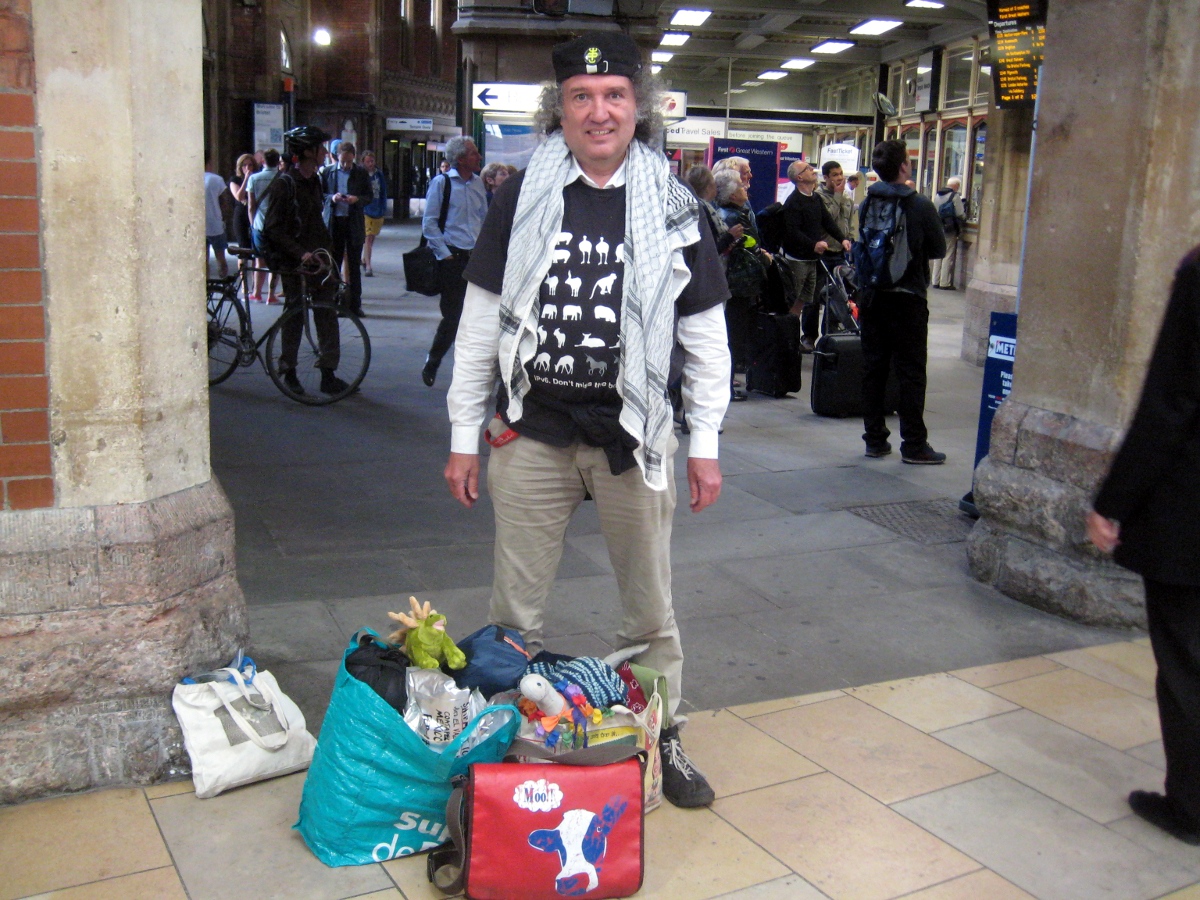
Patrice Riemens is a geographer and currently the Fellow of the Waag Society in Amsterdam. He is a promoter of Open Knowledge and Free Software, and has been involved as a «FLOSSopher» (a 'philosopher’ of the Free/Libre and Open Source Software movements) at the Asia Source and Africa Source camps, held in 2005 and 2006 to promote FLOSS among non-governmental organisations. He is a member of the staff of Multitudes. Riemens’ has been described as a «private intellectual (and sometimes internet activist) by choosing». De Waag Center for Old and New Media, where he is based, is in an old castle in Amsterdam and works on the cutting edge of technology, culture, education and industry. [Source: http://en.wikipedia.org/wiki/Patrice_Riemens]. In this interview Patrice share with us about why he engaged with the hacker and free software culture, which practices he develop with ICT, his relations with hacker women and the gender differences he sees in relation with ICT development. /
CAST: Patrice Riemens es geógrafo y actual miembro de la Sociedad Waag en Amsterdam. Él es un promotor del Conocimiento Abierto y del Software Libre, y ha participado como «FLOSSopher» (un «filósofo» de los movimientos Free / Libre y Open Source Software) en los Code source camps celebrados en Asia y África, en 2005 y 2006 para promover el software libre entre las organizaciones no gubernamentales. también es miembro de la revista francesa Multitudes. [Fuente: http://en.wikipedia.org/wiki/Patrice_Riemens]. EN esta entrevista Patrice nos cuenta como se fue relacionando con la cultura hacker y el software libre, que tipo de practicas desarrolla con las TIC, asi como nos ofrece su perspectiva del genero y de como pueden influenciar modos diferenciados de relacionarse con el desarrollo de las tecnologías.
Myriam Ruiz [Video]
Entrevista en Castellano

Me llamo Miriam Ruiz. Soy una ingeniera española, y Desarrolladora de Debian, una distribución de Linux. La mejor, para mí. Estoy muy metida en el empaquetamiento de juegos, así como en el proyecto Debian Women.También estoy involucrada en la netesfera feminista, en grupos como LinuxChix, Ubuntu-Women, WikiChix, ChicasLinux, Indymedia Women o Systers, pero realmente no hago muchas cosas en ellos, fundamentalmente porque no tengo tiempo para estar tan activa en todas partes. De cualquier forma, las apoyo totalmente. Asímismo soy editora de Barrapunto, uno de los weblogs más importantes en español, y realmente una de las mejores fuentes de información sobre tecnología y cultura geek en español en la red. [Fuente: http://www.miriamruiz.es/weblog/?page_id=2]. /
ENG: My name is Miriam Ruiz, I’m a Spanish engineer and a Developer in Debian, a Linux distribution. The best one, in my opinion. I’m quite involved the Games packaging, as well as in the Debian Women project. I’m also quite involved in the feminist netsphere, belonging to groups like LinuxChix, Ubuntu-Women, WikiChix, ChicasLinux, Indymedia Women or Systers. I don’t really do that much stuff in them, mostly because I don’t have time to be so active everywhere, but anyway I fully support them. I’m also an editor in Barrapunto, one of the most important weblogs in Spanish, and currently one of the bests sources of information about technology and geek culture in Spanish in the network. [Source: http://www.miriamruiz.es/weblog/?page_id=2]
Eleanor Saitta [Video]
Interview in English
Eleanor Saitta is a hacker, designer, artist, writer, and barbarian. She makes a living and a vocation of understanding how complex systems operate and redesigning them to work, or at least fail, better. Her work is transdisciplinary, using everything from electronics, software, and paint to social rules and words as media with which to explore and shape our interactions with the world. Her focuses include the seamless integration of technology into the lived experience, the humanity of objects and the built environment, and systemic resilience and conviviality. Eleanor is Principal Security Engineer at the Open Internet Tools Project (OpenITP), directing the OpenITP Peer Review Board for open source software and working on adversary modeling. She is also Technical Director at the International Modern Media Institute (IMMI), a member of the advisory boards at Geeks Without Bounds (GWoB) and the Calyx Institute, and works on occasion as a Senior Security Associate with Stach & Liu. She is a founder of the Constitutional Analysis Support Team (CAST), previously co-founded the Seattle-based Public N3rd Area hacker space, and works on the Trike and Briar projects. Eleanor tolds us about her perspective on infrastructure and resilience and how we can shift some paradigms to face those new challenges, She also explains her perspective on gender and ICT and her views on the meaning of hacking./
CAST: Eleanor Saitta es una hacker, diseñadora, artista, escritora. Se gana la vida analizando cómo funcionan los sistemas complejos y rediseñandolos para trabajar, o al menos fallar, menos. Su trabajo es interdisciplinario, abarcando desde la electrónica, el software, y las normas sociales y las palabras como medios con los que exploramos y damos forma a nuestras interacciones con el mundo. Eleanor es Ingeniera de Seguridad Principal del Proyecto Herramientas de Internet abierto (OpenITP), hace parte de la dirección de la Junta de Revisión de Peer OpenITP para el software de código abierto. También es Directora Técnica del Instituto Internacional Moderno Medios (IMMI), miembro de los consejos asesores de Geeks Sin límites (GWoB) y trabaja de vez en cuando como asociada senior de seguridad con Stach y Liu. Eleanor nos cuenta su punto de vista sobre las infraestructuras y su capacidad para durar o fallar presentando algunos paradigmas que hay que cambiar para poder afrontar los nuevos retos. También nos explica su punto de vista sobre el género y las TIC y acerca del significado de hacking para ella.
Richard Stallman [Video] [Bio]
Entrevista en Castellano
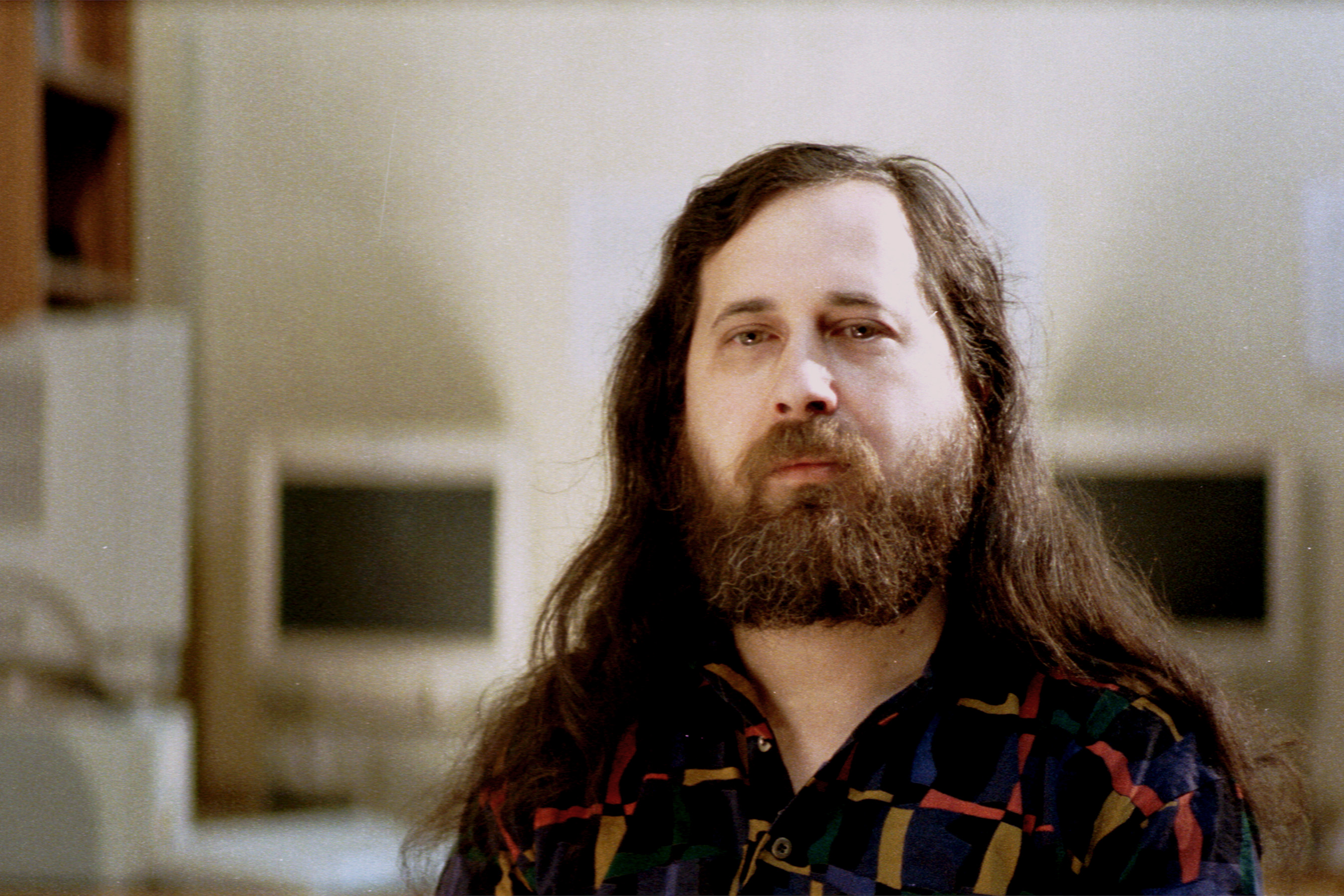
Richard Matthew Stallman, con frecuencia abreviado como « rms », es un programador estadounidense y fundador del movimiento por el software libre en el mundo. Entre sus logros destacados como programador se incluye la realización del editor de texto GNU Emacs, el compilador GCC, y el depurador GDB, bajo la rúbrica del Proyecto GNU. Sin embargo, es principalmente conocido por el establecimiento de un marco de referencia moral, político y legal para el movimiento del software libre, como una alternativa al desarrollo y distribución del software no libre o privativo. Es también inventor del concepto de copyleft (aunque no del término), un método para licenciar software de tal forma que su uso y modificación permanezcan siempre libres y queden en la comunidad de usuarios y desarrolladores. [Fuente:https://es.wikipedia.org/wiki/Richard_Stallman]. En esta entrevista Stallman reflexiona acerca de porqué hay menos mujeres que hombres en las comunidades de desarrollo de software libre. Su conclusión es que no sabe porqué se da esa situación pero le gustaría en cualquier caso que hubiera mas diversidad de genero dentro del software libre./
ENG: Richard Matthew Stallman, often known by his initials, RMS, is an American software freedom activist and computer programmer. He campaigns for the freedom to use, study, distribute and modify software; software that ensures these freedoms is termed free software. He is best known for launching the GNU Project, founding the Free Software Foundation, developing the GNU Compiler Collection and GNU Emacs, and writing the GNU General Public License. [Source: https://en.wikipedia.org/wiki/Richard_Stallman]. In this interview Stallman reflects about why there are fewer women than men inside free software communities, the conclusion is that he does not know why but he would welcome more gender diversity.
Rena Tangens [Video]
Interview in English

Rena Tangens is an artist which lives and works in Germany. She worked with experimental film, video and free radio. Founded the gallery and art project «Art d’Ameuble-ment» together with padeluun. She brought the first modem to documenta (d8!) and was one of the first women into the Chaos Com-puter Club. Rena Tangens is cofounder of FoeBuD e.V. ( www.foebud.org) and the BIONIC bbs and curator of the monthly culture & technology event PUBLIC DOMAIN since 1987. Published with FoeBuD the first manual on PGP encryption in German language. She does research on androcentrism and life in the networks, lectures and consulting for companies and institutions as well as the Enquete-Kommission of the German Bundestag. [Source: http://www.obn.org/LHL/info.html]. In this interview Rena told us about her political vision of hacktivism and explains some of the initiatives she has been involved with as for instance the organisation of the Big Brother Awards, She also share her perspective on gender and hacker communities and give us some recommendations about how to get more women on board./
CAST: Rena Tangens es una artista que vive y trabaja en Alemania. Trabajó con cine experimental, vídeo y radio libre. Fundadora de la galería de arte «Art d’Ameuble-ment», junto con padeluun. Ella trajo el primer módem a Dokumenta (d8!) y fue una de las primeras mujeres en integrar el Chaos Computer Clubb. Es también cofundadora de la asociación FoeBuD e.V. (www.foebud.org) y curadora de un boletín cultural y tecnológico mensual llamado DOMINIO PÚBLICO desde 1987. Con FoeBuD publicó el primer manual sobre el cifrado PGP en lengua alemana. [Fuente: http://www.obn.org/LHL/info.html]. En esta entrevista Rena nos habló de su visión política del hacktivismo y explica algunas de las iniciativas en las cuales ha estado involucrado como por ejemplo la organización de los Premios Big Brother. También comparte su punto de vista sobre género y comunidades de hackers ofreciendo algunas recomendaciones acerca de cómo involucrar a más mujeres.
Sophie Toupin [Video]
Interview in English
Sophie Toupin’s work explores the linkages and intersections between technology, feminism, queer theories and activism through a variety of ethnographic studies and projects. She collaborates with FemHack a mobile feminist hackerspace in Montreal, CKUT 90.3 fm a local community and campus radio station and the TransHackFeminist project in Calafou (Spain). Sophie is working for Media@McGill, a hub for research, scholarship and public outreach on media, technology and culture at McGill University in Montreal, Canada. Her current research focuses on feminist peer production practices and, feminist, queer and trans hacker culture.
Discusión en Grupo [Video]
Discussion in English

Se realizo un grupo de discusión con Petra Timmerman y Donna Metzlar (integrantes del colectivo genderchangers.org), Marta G Franco (integrante del colectivo ladyfest sur, ladyfest madrid y Diagonal), Anja y Wendy (dos hermanas programadoras), Nynke Fokma (programadora de embedded systems y experta en extreme computing llevándola a residir varias veces en Sillicon Valley por motivos profesionales) y Patrice Riemens (integrante colectivo hacker Hippies from hell). Este grupo de discusión iauguró toda la investigación lelacoders y nos permitió ahondar en nuestras hipotesis iniciales de investigación. /
ENG: We performed a panel discussion with Petra Timmerman and Donna Metzlar (genderchangers.org collective), Marta G Franco (ladyfest member and Diagonal), Anja and Wendy (two sisters programmers), Nynke Fokma (deevlopper of embedded systems and expert in agile computing repeatedly taking her to reside in Silicon Valley for professional reasons) and Patrice Riemens (Hippies from hell). This discussion group initiated the research Lelacoders and allowed us to delve into our initial research hypothesis.
***********************************************************************************************
Lista de entrevistadas para el documental LelaCoders:
La captura, edición y puesta online de estas entrevistas ha sido posible gracias a una residencia de artista virtual para Studio XX durante los meses de Abril/Mayo 2013. Todas las entrevistas se pueden ver en este canal Lelacoders.
Las entrevistas realizadas durante el encuentro TransHackFeminist se pudieron editar gracias al apoyo de ESC (Graz) para el encuentro Ministry of Hacking.
List of Interviewees for the documentary LelaCoders:
The capture, edition and uploading of those interviews has been possible thanks to the support of Studio XX through a virtual artist residence during the months of April/May 2013. All the videos can be viewed in this Lelacoders channel.
The interviews achieved during the TransHackFeminist converegence could be edited thanks to the support of ESC (Graz) for the exhibition Ministry of Hacking.
Liste d’interviews pour le documentaire LelaCoders:
La capture, édition et mise en ligne des ces entretiens a été réalisé dans le cadre d’une résidence d’artiste virtuelle soutenue par Studio XX durant les mois de Avril/Mai 2013. Tout les entretiens sont visibles dans ce canal Lelacoders.
Les entretiens réalises durant la convergence TransHackFeministe ont pu être édités grâce au support de ESC (Graz) pour l’exhibition Ministry of Hacking.


***********************************************************************************************